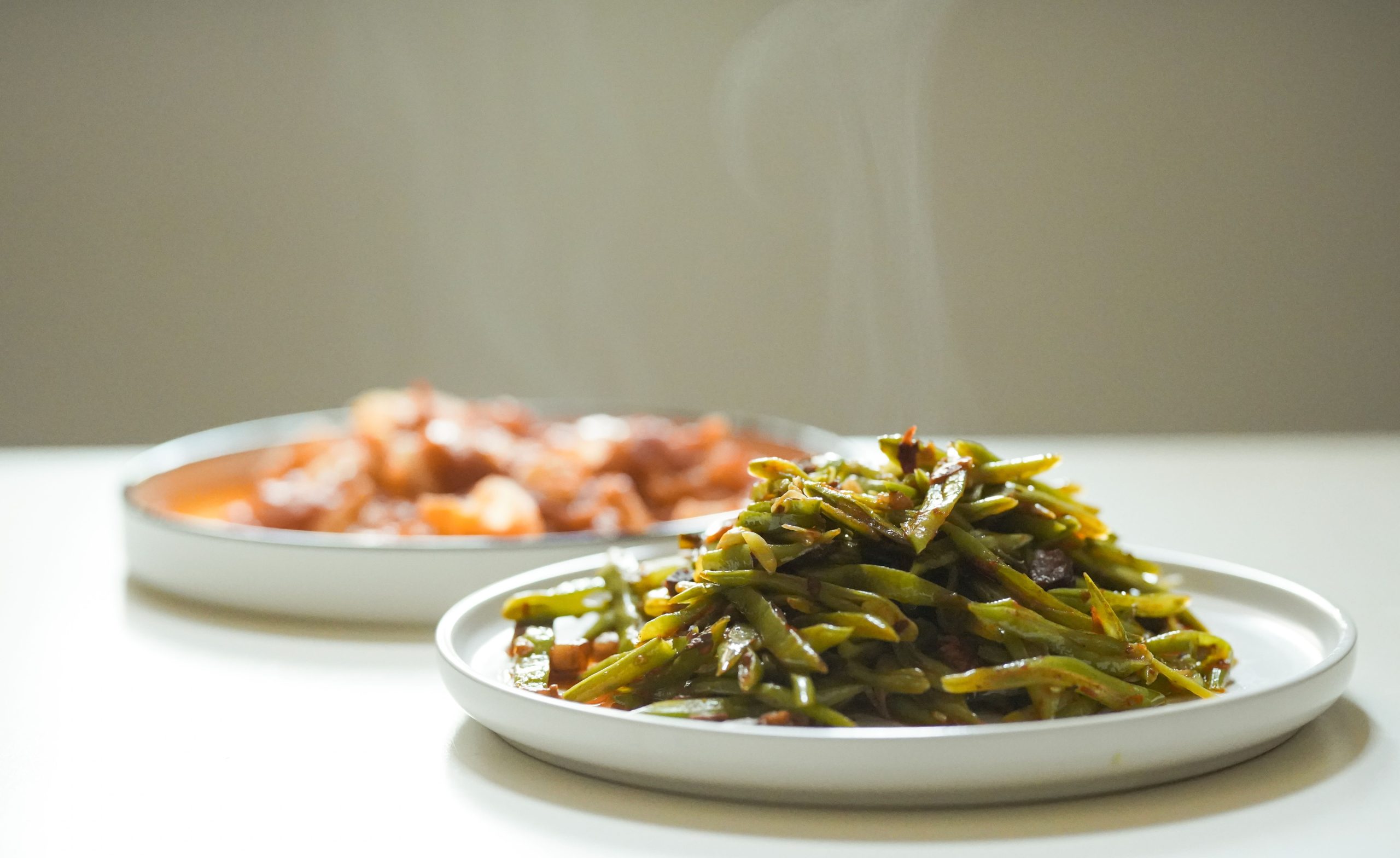
Eat right, and your body does the rest
Eating for your body is not medicine and not a tonic. It begins with treating your daily meals as the starting point for caring for yourself.
Songke’s food direction is grounded in two national documents: the Dietary Guidelines for Chinese Residents, which sets out the basic principles of eating, and the Catalogue of Substances Traditionally Used as Both Food and Chinese Herbal Medicine, which defines the range of everyday ingredients you can eat to support your body.
No mysticism, no pile of taboos. We do one thing: help you find the handful of things that suit the state your body is in right now.
What is "food as medicine"?
Put simply, food as medicine means using everyday food to care for your body. It isn’t medication and it isn’t a tonic — it’s treating your daily meals as the starting point for feeling better.
Replying to a proposal from the National Committee of the Chinese People’s Political Consultative Conference, the National Health Commission stated: “Food as medicine and food-based tonics have a long history of practice and a broad public base in China, and, combined with traditional Chinese medicine theory, they have gradually formed an increasingly complete food-based health culture.”
At Songke, food as medicine isn’t about memorizing a list of taboos. It’s about helping you find the few things that suit the state your body is in right now — what to eat, when to eat it, and how to combine it. One body, one plan, starting with what’s on your plate.
How is food as medicine different from taking medicine?
The core difference: food as medicine uses food, not drugs.
Under Article 38 of China’s Food Safety Law, no medicine may be added to food that is produced or sold — but substances traditionally used as both food and Chinese herbal medicine, known as “food-medicine substances”, may be.
In other words, what you use in food as medicine is essentially something you can eat as food; it simply carries some supportive value as well. That also means the bar to entry is low — no doctor’s prescription needed, and you can put it into practice in your own daily eating.
Of course, if you have a specific health condition, food as medicine cannot replace the judgement of a qualified physician.
Why does the same ingredient help someone else but do nothing for me?
Because everyone’s body is in a different state, and the same ingredient lands differently in each of us.
Take ginger tea: someone who always feels cold warms up after a cup, while someone prone to internal heat may end up with a dry mouth and throat. Or red dates: someone with weak qi and thin blood may feel more energetic, while someone carrying more dampness may feel heavier afterwards.
The ingredient isn’t the problem — whether it matches your body is. This is what Songke means by “one body, one plan”: understand your own tendencies first, then decide what to eat and what to leave out.
Is there official national guidance on how to eat?
Yes. The Dietary Guidelines for Chinese Residents is an authoritative document revised by nearly a hundred experts organized by the Chinese Nutrition Society. It applies to healthy people aged 2 and above, and aims to guide people toward better nutrition and chronic disease prevention through a balanced diet.
The latest edition sets out eight principles for a balanced diet, from eating a variety of foods and balancing food with activity to cutting salt and oil and eating on a regular schedule — covering the core principles of everyday eating.
Songke’s food direction rests on exactly the same underlying logic as these guidelines: get the basics right first, then talk about personalization.
Which guideline matters most?
If you remember only one, make it “eat a variety of foods and combine them well.”
The guidelines recommend an average of more than 12 kinds of food a day and more than 25 a week, well combined. That includes 200–300 g of grains a day, of which 50–150 g should be whole grains and mixed beans, plus 50–100 g of tubers.
For many people the problem isn’t eating the wrong thing — it’s eating too narrow a range, the same few items day after day, with nutrition coming from too few sources. Widening the variety is the most basic and most effective first step.
What does "balance food with activity" actually mean?
The second principle is “balance food and activity for a healthy weight.” Its core recommendations: people of every age should be physically active every day and maintain a healthy weight; don’t overeat, and keep your energy in balance.
In practice: at least five days of moderate-intensity activity a week, totaling more than 150 minutes; and ideally 6,000 steps a day of intentional activity.
For city dwellers, the easiest thing to overlook is sitting less — the guidelines specifically suggest getting up and moving every hour. It sounds minor, but it makes a real difference to the metabolism of anyone who works at a desk.
Why do the guidelines single out salt, oil, sugar, and alcohol?
Because these four are where everyday diets most often overshoot, and where the long-term health impact is greatest.
The specific advice: adults should take in no more than 5 g of salt and 25–30 g of cooking oil a day. Keep added sugar under 50 g a day, and ideally under 25 g. Trans fats should stay below 2 g a day. Skip sugary drinks, or drink them rarely.
For many people, feeling “not quite well” isn’t about a deficiency — it’s about too much: too much salt, too much oil, too much sugar. Subtracting first matters more than rushing to add.
Why do the guidelines include eating on a regular schedule?
Because when you eat matters as much as what you eat.
The sixth principle is “eat on a regular schedule and drink enough water.” Its core recommendations: plan your three meals sensibly, at set times and in set amounts, don’t skip meals, and eat breakfast every day. Eat regularly and in moderation — no bingeing, no fussy eating, no extreme dieting.
For many younger people, irregularity is the real problem: no breakfast, a thrown-together lunch, a huge dinner, a late-night snack. Once your metabolic rhythm is thrown off, no amount of “tonic” will easily set it right. Stabilizing when you eat is the first step in food as medicine.
What does "food and medicine share the same origin" actually mean?
“Food and medicine share the same origin” is the popular phrase. The official term is “food-medicine substances” — that is, substances traditionally used as both food and Chinese herbal medicine.
The National Health Commission defines them as substances traditionally used as food that are also listed in the Pharmacopoeia of the People’s Republic of China. Beyond a safety assessment confirming they are safe to eat, they must also comply with regulations on protecting herbal medicine resources, wild fauna and flora, and ecosystems.
Put simply: you can eat these as food, and they also appear in the pharmacopoeia. They aren’t medicine, but they carry a supportive quality that ordinary food does not.
How many food-medicine substances has the government published?
To date, the State Council’s health department has published four batches of the list of substances that are both food and Chinese herbal medicine, covering 106 substances in total.
The most recent expansion came in August 2024, adding four: Rehmannia root, dwarf lilyturf root, asparagus root, and Exocarpium Citri Grandis.
The list is broad — from kitchen staples such as Chinese yam, hawthorn, red dates, and goji berries to items that have drawn attention in recent years, such as Dendrobium officinale, reishi, and astragalus. Every ingredient used in a Songke food plan comes from this catalogue.
Why does Songke only use ingredients from the catalogue?
Because safety is the floor and compliance is the starting point.
The catalogue is built through a strict process: a provincial health department must propose a substance and provide evidence of traditional use and a food-safety assessment before it can be included. Since 2023, newly published catalogues also come with limits for key food-safety indicators such as lead, cadmium, arsenic, and mercury.
Songke recommending only ingredients on the list means this: what you eat has had its safety assessed by the state, can be eaten as part of daily life, and does not carry the side-effect concerns of a drug.
Will the Food as Medicine list keep growing?
Yes. It’s a dynamically managed catalogue.
In its reply to the proposal, the National Health Commission stated: “We will continue to act within our statutory duties, implement the ‘big food’ perspective and the concept of high-quality development, and work with the State Administration for Market Regulation and other relevant departments to keep the food-medicine catalogue under dynamic revision.”
The catalogue has been expanding steadily: since 2021, 19 substances have been added in three batches, including angelica, astragalus, codonopsis, Dendrobium officinale, and Exocarpium Citri Grandis. More ingredients will join the list as they clear safety assessment.
Songke will keep tracking these updates; every recommendation is based on the latest official list.
I don’t know what suits me. What should I do?
You don’t have to guess.
A Songke Reset plan reads your sex, age range, tongue appearance, daily rhythm, and main concerns, and combines them with the national food-medicine catalogue to give you a food direction that fits the state your body is in right now.
Not a generic checklist, not an influencer’s recommendation — one body, one plan.
60 seconds, no sign-up. Take it once and you’ll know what suits you.
Songke builds a food direction made for your body